
AUSTRALIAN FOOD MANUFACTURING · 26 February 2026
Manufacturing investment is a route-to-market decision
SPC Global’s 2026 manufacturing announcement links production planning, co-manufacturing and export opportunity. For food businesses, capacity only pays when it supports a clear commercial route.
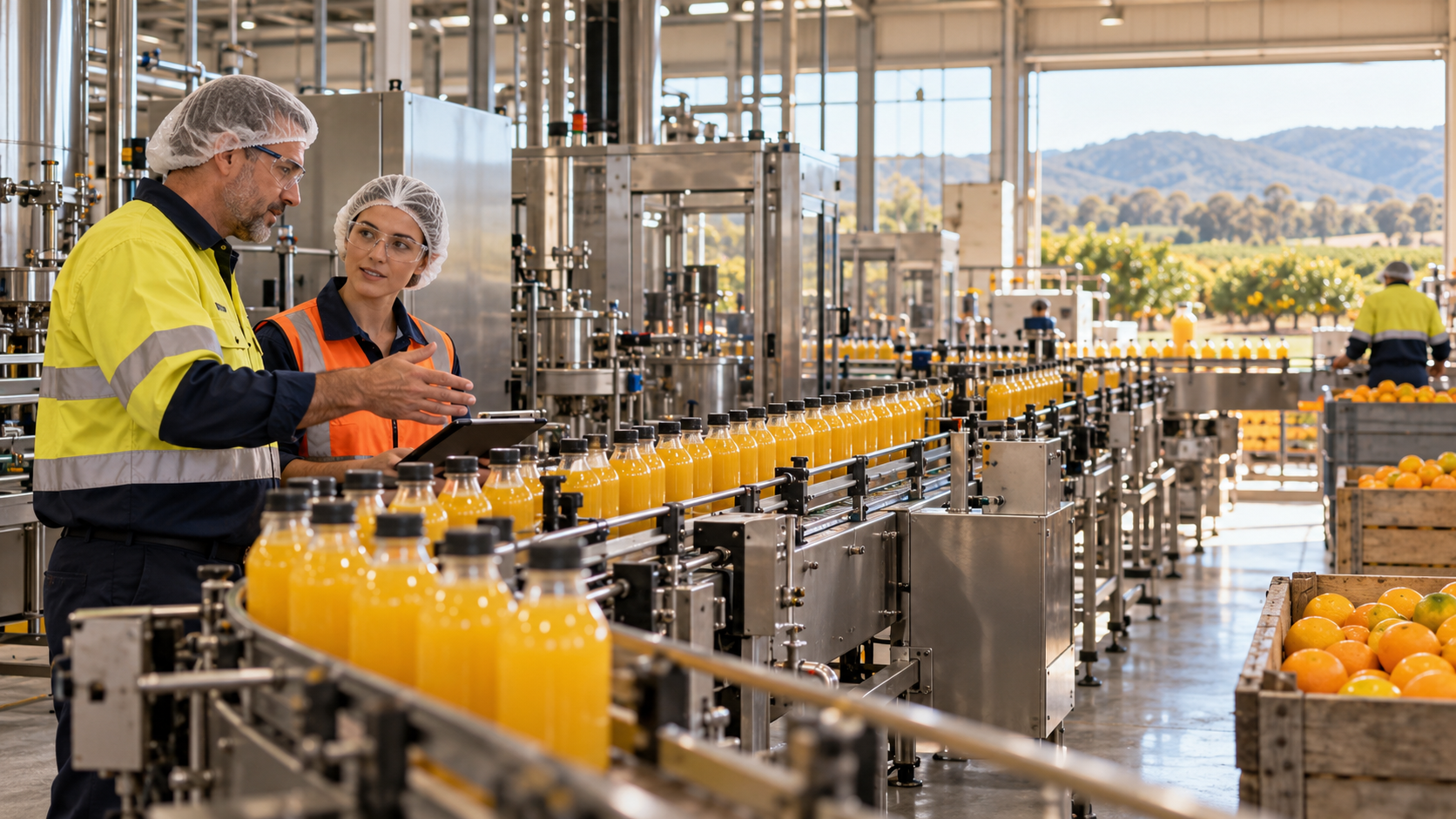
The commercial story behind the factory
Manufacturing investment is often discussed as a plant or equipment decision. In practice, it is also a decision about which products to make, where to make them, how to use capacity and which customers a business can reliably serve.
A 2026 Australian example
In a media release dated 26 February 2026, SPC Global outlined changes to its manufacturing network, including a co-manufacturing arrangement with Fair Dinkum Foods in Griffith. The company said the changes were intended to align production more closely with demand, support export opportunities and improve capital efficiency. SPC also forecast more than $8 million in annual savings from just under $3 million of capital investment. Those figures are company projections, not independently verified outcomes.
Why the route matters
For manufacturers, production capability is only one part of market readiness. Product specification, pack format, landed cost, shelf life, distributor fit, forecast accuracy and customer demand all affect whether investment translates into sustainable sales. A route-to-market plan connects these decisions before capacity is committed.
Hatched perspective
Hatched helps manufacturers work through the commercial pathway around a product: clarify the proposition, assess distributor and customer fit, prepare account discussions and coordinate agreed follow-through. The goal is to make the market opportunity and operating requirements visible alongside the manufacturing plan.